Clear aligners vs braces: which is right for you?
Clear aligners and fixed braces can both straighten teeth, but they work in different ways and suit different people. This guide compares them honestly, so you know what to ask when you see a dentist. Only a dentist can tell you which is right for your teeth.
In Greater Manchester or Wilmslow? We'll match you, free, with a partner dentist offering My Cosmetic Aligners. Treatment from £995 as a guide.
How each one works
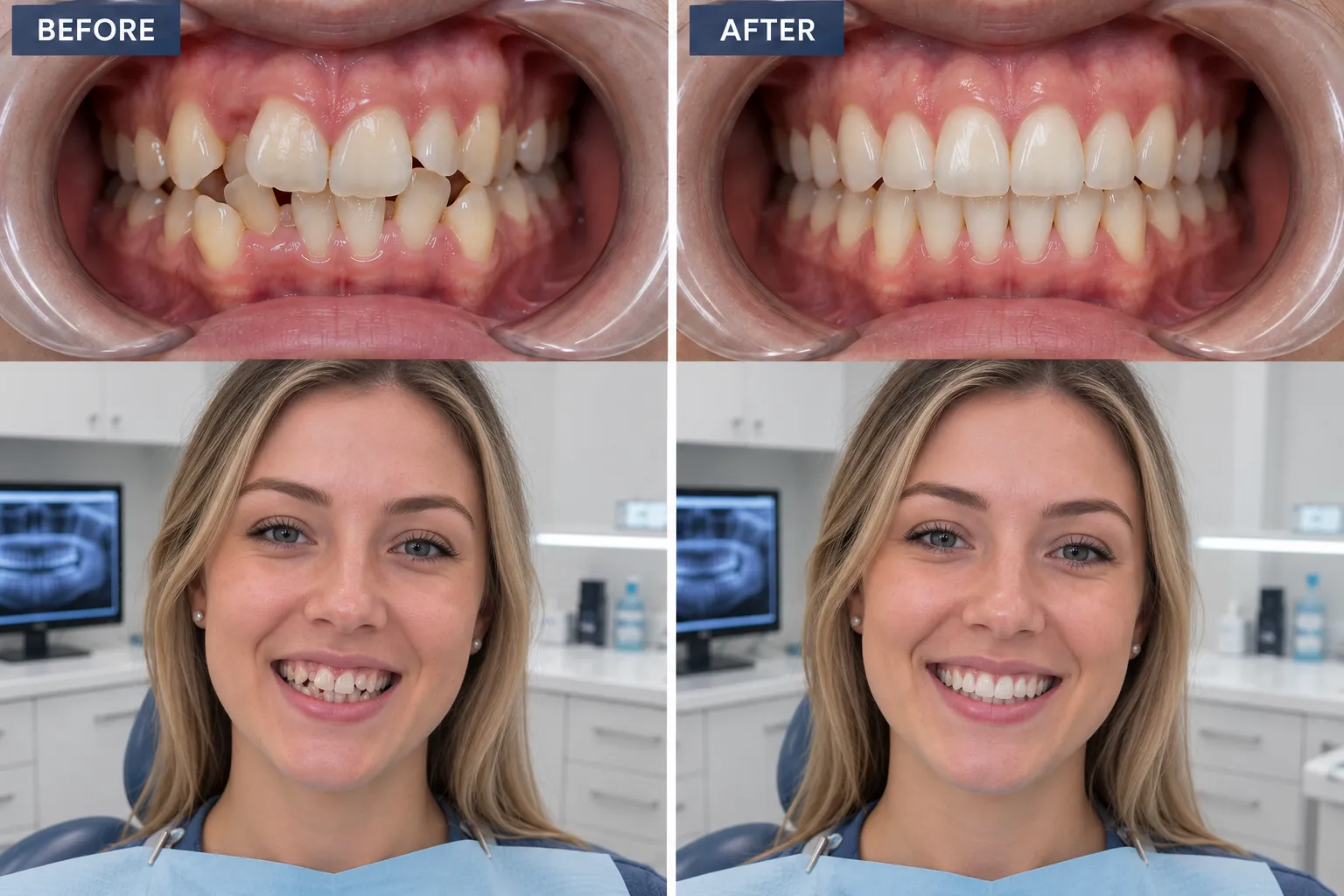
Clear aligners are a series of thin, clear, removable trays made from a digital scan or impressions of your teeth. Each aligner is shaped slightly differently, and you move on to the next one when your dentist directs, usually every week or two. Small tooth-coloured bumps called attachments are often bonded to some teeth to help the aligners grip and move them.
Fixed braces use brackets bonded to the teeth, joined by a wire. The dentist or orthodontist adjusts the wire at regular appointments to move the teeth. Brackets can be metal, tooth-coloured ceramic, or lingual, which means fitted to the back of the teeth so they're hidden from view.
Side-by-side comparison
| Clear aligners | Fixed braces | |
|---|---|---|
| Appearance | Clear and hard to notice. Attachments are tooth-coloured | Metal brackets are visible. Ceramic is less noticeable; lingual is hidden |
| Removable? | Yes, for eating, drinking and cleaning | No, they stay on for the whole treatment |
| Eating | Take aligners out, so no food restrictions, but brush before putting them back | Avoid hard, sticky and chewy foods that can damage brackets |
| Cleaning | Brush and floss as normal with aligners out | Takes longer, with special brushes to clean around brackets |
| Comfort | Pressure for a day or two with each new set. No wires | Soreness after adjustments, and brackets can rub at first |
| Your commitment | Must be worn around 20–22 hours a day | Work all the time because they're fixed |
| Cases treated | Many mild to moderate cases, and some more complex ones | A very wide range, including complex cases |
| Treatment time | Many mild to moderate cases around 4–12 months | Often 12–24 months for comprehensive treatment |
| Afterwards | Retainers needed | Retainers needed |
Treatment times are typical ranges only. Your own treatment time depends on your teeth and is confirmed by your provider.
When clear aligners may suit you
- You have mild to moderate crowding, gaps or crooked teeth
- Your teeth have moved since you had braces as a teenager
- You'd prefer treatment that most people won't notice, for example at work
- You want to keep eating the foods you enjoy and clean your teeth normally
- You're confident you'll wear the aligners for most of the day and night
When braces may be the better choice
- Your case is complex, for example with severe crowding or a large bite problem
- Some teeth need to move a long way or rotate significantly
- You know you'd struggle to wear removable aligners for 20–22 hours a day
- Your dentist or orthodontist recommends fixed treatment for your teeth
Some people need a combination, or a referral to a specialist orthodontist. A good dentist will tell you honestly if aligners aren't the right tool for the job.
The biggest difference: who's in control
With fixed braces, the brace is always working. With aligners, you're in charge of wear time. Leaving them out for long stretches can slow treatment down, or mean teeth don't move as planned and extra aligners are needed. Most people get into the habit quickly, but it's worth being honest with yourself before you choose.
On the other hand, being able to take aligners out is exactly why many adults prefer them: no food restrictions, normal brushing and flossing, and nothing to worry about before a meeting, a date or a photo.
Appearance at work and in photos
For many adults, appearance is the deciding factor. Aligners are clear and fit closely, so they're hard to notice in conversation. Ceramic braces are less noticeable than metal, and lingual braces can't be seen from the front, but both usually cost more than standard metal braces.
Cost
Private metal braces often cost a similar amount to clear aligners, with ceramic and lingual braces usually costing more. With My Cosmetic Aligners, treatment starts from £995 as a guide, and partner practices set their own prices. Read our clear aligner cost guide for more detail.
Retainers are the same for both
Whichever you choose, your teeth will naturally tend to move after treatment, so you'll need retainers. These can be removable, fixed behind the teeth, or both. Many dentists now recommend wearing retainers long term, often at night. Ask what's included and what replacements cost.
How to decide
Start with what matters to you: appearance, comfort, convenience, cost or the time you have. Then let a dentist examine your teeth and tell you which options are realistic. If you're in Greater Manchester or Wilmslow, we can match you, free, with a partner location offering My Cosmetic Aligners for a no-obligation consultation. If aligners aren't right for you, they'll tell you.
Want advice on your own teeth? Matching is free and there's no obligation.
More guides
Clear aligner costs · Clear aligners vs braces · Treatment time · Invisalign® alternatives
Clear aligners near you
Manchester · Salford · Trafford · Stockport · Tameside · Oldham · Rochdale · Bury · Bolton · Wigan · Wilmslow