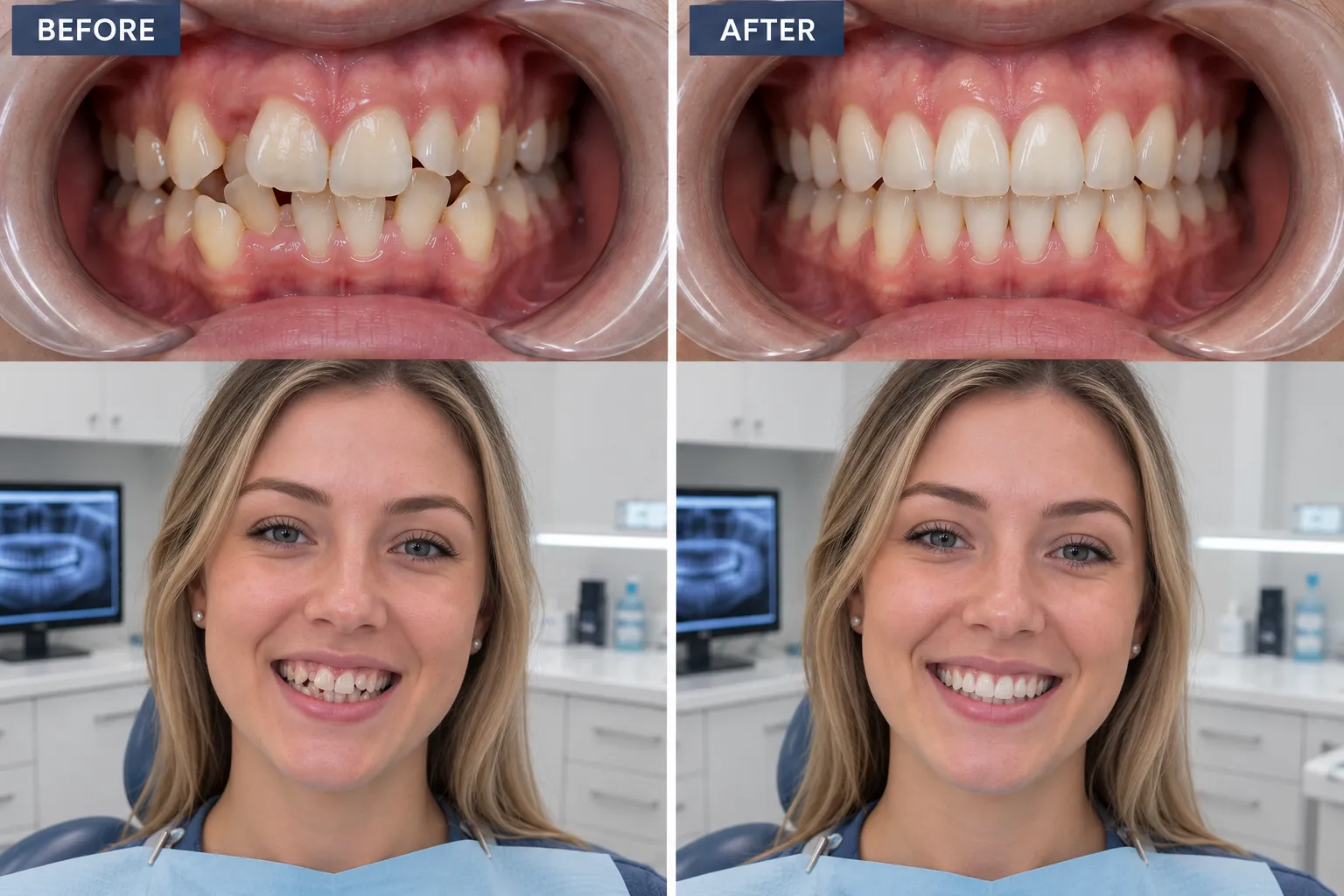
How long does clear aligner treatment take?
The short answer: many mild to moderate cases take around 4 to 12 months, and more complex cases can take longer. After that, you'll wear retainers to keep your teeth in place. This guide walks through each stage, what affects the timescale and what you can do to help keep treatment on track.
In Greater Manchester or Wilmslow? We'll match you, free, with a partner dentist offering My Cosmetic Aligners. Treatment from £995 as a guide.
The stages of treatment
| Stage | What happens | Typical timing |
|---|---|---|
| 1. Enquiry and match | You tell us about you, and we match you with a partner location near you | Varies |
| 2. Consultation | A dentist checks your teeth and gums and explains your options and price | One appointment |
| 3. Scan and plan | Your teeth are scanned and a stage-by-stage treatment plan is prepared | Usually a few weeks before your aligners are ready. Ask your provider |
| 4. Wearing aligners | You wear each set as directed, changing to the next one usually every one to two weeks | Many mild to moderate cases around 4–12 months |
| 5. Reviews | Your dentist checks your progress | Every few weeks to a few months, depending on the practice |
| 6. Refinements | Extra aligners to fine-tune the result, if needed | Can add a few weeks or months |
| 7. Retention | Retainers keep your teeth in their new position | Long term, as advised by your dentist |
What affects how long treatment takes?
- How much your teeth need to move. Closing a small gap or tidying slight crowding takes less time than correcting severe crowding or a bite problem
- One arch or both. Treating only the upper or lower teeth is often quicker
- How well you wear your aligners. Aligners need to be worn around 20 to 22 hours a day. Regularly leaving them out is one of the most common reasons treatment takes longer
- How your body responds. Teeth move at different rates in different people, and this can't be predicted exactly
- Whether you need refinements. If some teeth don't move fully as planned, extra aligners may be needed
- Keeping appointments. Missed reviews, or lost and broken aligners, can cause delays
- Your dental health. Any decay or gum problems need treating first, which can add time before you start
How many hours a day do you need to wear aligners?
Most providers ask for around 20 to 22 hours a day. That means aligners are in all the time except when you're eating, drinking anything other than water, and brushing your teeth. Night-time wear is an important part of the total, so you sleep in them too.
Think of it this way: every hour your aligners are out is an hour your teeth aren't being moved. A long lunch, a night out or a weekend away without them adds up.
How often do you change aligners?
Usually every one to two weeks, but always as your dentist directs. Some plans use a different schedule. Don't skip ahead to the next set early to try to speed things up. Teeth need time to move, and the bone around them needs time to adjust.
Can treatment be made quicker?
There's no safe shortcut. Teeth move gradually, and moving them too quickly risks damage to the teeth and the supporting bone. The things that genuinely help are simple:
- Wear your aligners for the hours your dentist recommends
- Change sets exactly when you're told to
- Keep your review appointments
- Look after your aligners so they don't get lost or damaged
- Contact your provider promptly if an aligner doesn't fit or an attachment comes off
Be cautious of anyone who promises a fixed finish date before they've examined you. A good provider will give you an estimate and explain what could change it.
Planning around an event
If you have a wedding, holiday or other big occasion coming up, tell the dentist at your consultation. They can tell you whether it's realistic to finish beforehand, and how to manage treatment around the day itself. Our Trafford page has more tips on planning around an event.
What happens when treatment ends?
When your final aligner is done, your dentist will check the result and fit your retainers. Teeth naturally tend to move throughout life, so retainers are what protect your result. Many dentists now recommend wearing them long term, often at night. Ask which type of retainer you'll have, what's included in your price and what replacements cost.
Clear aligners vs braces: time
Comprehensive treatment with fixed braces often takes around 12 to 24 months, while many mild to moderate aligner cases take around 4 to 12 months. That's not a like-for-like comparison, because braces are often used for more complex cases. Read our guide to clear aligners vs braces for the full picture.
Find out your own timescale
Only a dentist can estimate how long your treatment would take, after examining your teeth. If you're in Greater Manchester or Wilmslow, we can match you, free, with a partner location offering My Cosmetic Aligners for a no-obligation consultation. Treatment starts from £995 as a guide, and your provider will confirm your price and estimated timescale before you commit.
Want advice on your own teeth? Matching is free and there's no obligation.
More guides
Clear aligner costs · Clear aligners vs braces · Treatment time · Invisalign® alternatives
Clear aligners near you
Manchester · Salford · Trafford · Stockport · Tameside · Oldham · Rochdale · Bury · Bolton · Wigan · Wilmslow